
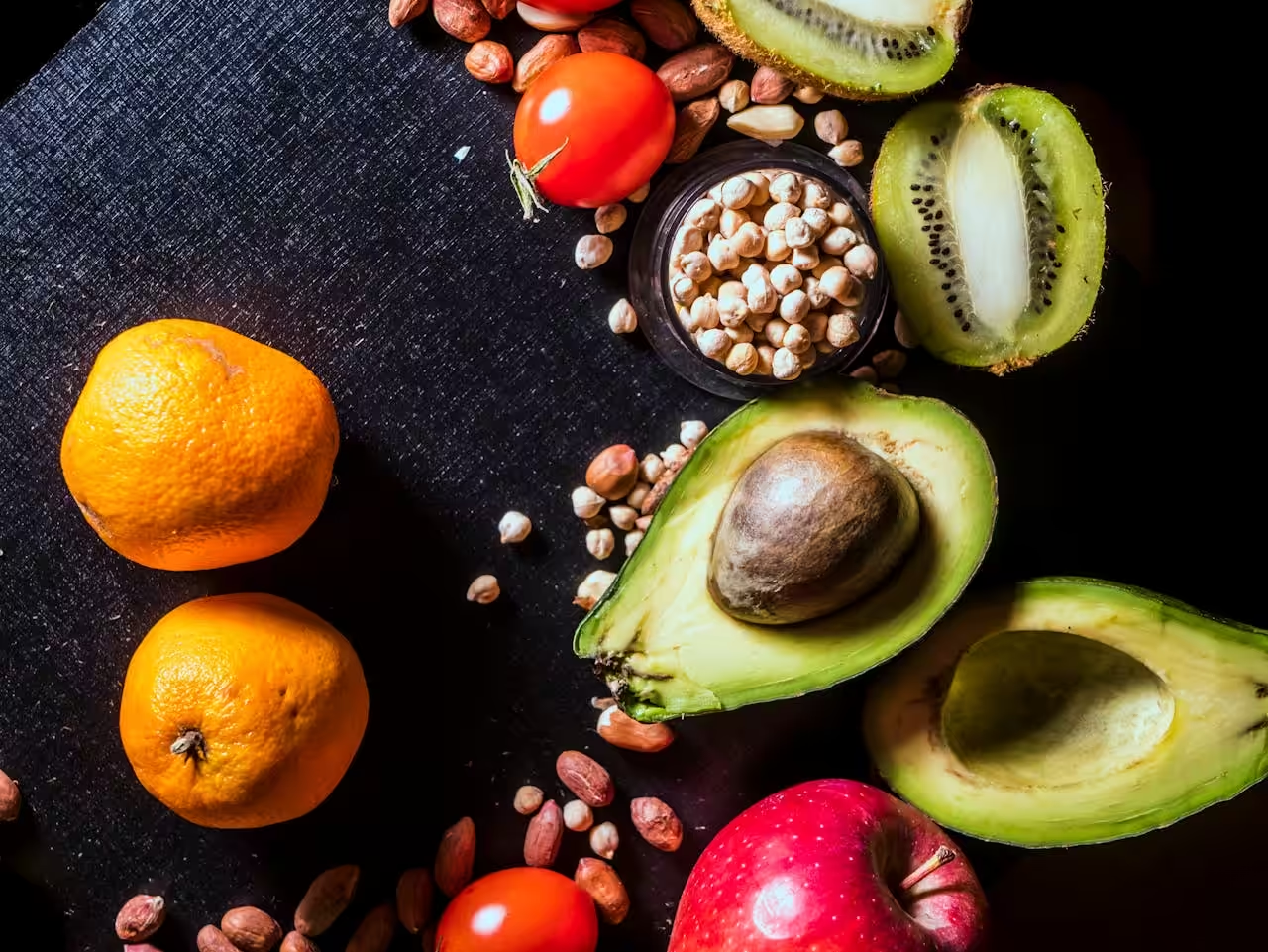
Fruit desserts, fresh salads, or decorative fruit plates are just some of the dishes that require precise fruit cutting. Choosing the right knife for this task can significantly affect the final result and the comfort of work. Although many people use universal kitchen knives to cut fruit, there are specialized tools that are created with different types of fruit in mind. In this article, we’ll take a look at what knives work best for cutting fruit, what their advantages are, and how to use them correctly.
Knives for soft fruit: precision and delicacy
Soft fruits such as strawberries, kiwis, or peaches require special care when cutting. Too much pressure or an unsuitable knife can easily crush the delicate flesh and cause the fruit to lose its shape and aesthetic appeal. For such fruits, knives with sharp, thin, and serrated blades are ideal.
Serrated knives are an excellent tool for cutting soft fruits. Thanks to the serrations, they easily cut through the delicate skin without destroying the fruit’s structure. These knives work especially well with fruits that have thin skin, such as tomatoes or peaches, which can be difficult to cut with a regular knife. It’s important not to use too much pressure – the blade should pass smoothly through the fruit, which minimizes the risk of crushing the flesh.
Knives for citrus fruits: serrated blades and precise cuts
Citrus fruits such as oranges, grapefruits, or lemons have a hard, thick peel that is difficult to cut with a regular knife. On the other hand, the inside of the fruit is soft and juicy, which requires a delicate approach so as not to lose valuable juices. This is why knives with a serrated blade are ideal for cutting citrus fruits.
Serrated blades will easily cut through the hard peel, allowing for the precise carving of perfect slices or wedges. For peeling and filleting citrus fruits, you can use special filleting knives – the blade of these knives is flexible, which allows for the precise separation of the flesh from the membranes, while maintaining the aesthetics and shape of the fruit.
Knives for hard fruit: durable and sharp
Cutting hard fruits such as apples, pears, or pineapples requires the use of a knife with a solid, durable blade that can handle the thick peel and hard flesh. In this case, chef’s knives or Santoku knives, which are massive enough to handle harder fruits, will work best.
Thanks to the solid blade of a chef’s knife, cutting apples or pineapples becomes much easier and more precise. These knives allow for cutting into both thin slices and thicker pieces, ideal for fruit salads or desserts. When cutting a pineapple, it’s worth paying attention to the peeling technique – special pineapple knives with characteristic grooves make it easier to separate the hard peel from the flesh.
Knives for exotic fruits: versatility and sharpness
Exotic fruits such as mango, papaya, or passion fruit can be difficult due to their varied texture and hardness. Cutting these fruits requires versatility and the right tool. Filleting knives and Santoku knives are excellent choices for this type of fruit.
Filleting knives, thanks to their thin and flexible construction, allow for the precise separation of the flesh from the pit or hard peel, while maintaining the aesthetics of the fruit. In turn, Santoku knives, thanks to their versatility, are great for cutting both harder and softer exotic fruits, such as papaya or mango.
Choosing the right knife for cutting fruit can significantly facilitate work in the kitchen and improve the aesthetics of prepared dishes. Soft fruits, such as strawberries or kiwis, require delicate serrated blades, while for hard fruits, such as apples or pineapples, it’s better to use solid chef’s knives or Santoku knives. Exotic fruits, with their varied texture, are best cut with filleting or Santoku knives. Regardless of the type of fruit, the key to success is choosing the right tool that will make cutting easier and allow you to maintain the aesthetics of fruit dishes.


