
-


-
-

-

-
Sold Out


-
Sold Out


-
Sold Out


-
 Sold Out
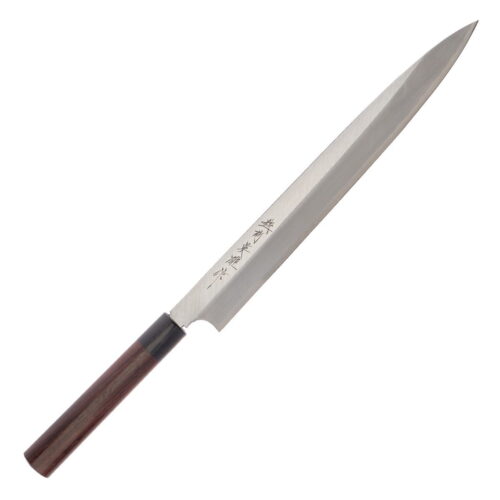
Hideo Kitaoka Aogami 2 Yanagiba 300 mm Migaki
Original price was: 1500,00 zł.1200,00 złCurrent price is: 1200,00 zł. -
 Sold Out
 -
Sold Out


-
Sold Out


-
Sold Out


-
Sold Out


-
Sold Out


-
Sold Out


Kitchen knives made of Aogami #2 steel are known for their excellent quality and durability. This steel is one of the highest-grade types of steel in Japan, which is used in the production of the highest quality kitchen knives. Aogami #2 steel is considered one of the best steels because it combines three important features. First, it is a very hard steel, which means that it is difficult to scratch and bend. Second, it is a carbon steel, which means that it is able to maintain its edge for a long time, even with frequent use. Third, it is a rust-resistant steel, which means that knives made from this steel will not rust, which is especially important in the kitchen.
An important advantage of knives made from Aogami #2 steel is also the fact that they are able to maintain their edge longer than knives made from stainless steel. This is why knives made from this steel are especially popular among professional chefs who need knives that will maintain their edge during a full day’s work in the kitchen. It is worth remembering, however, that knives made from this steel require special care. Due to their hardness, these knives are more susceptible to damage during sharpening, and they also require regular grinding to maintain their sharpness.
Kitchen knives made of Aogami #2 steel vs. kitchen knives made of Aogami #1 steel – similarities and differences
Kitchen knives made of Aogami #2 and Aogami #1 are two types of knives that are very popular among professional chefs and cooking enthusiasts. Both types of steel are considered to be some of the best in Japan and are known for their excellent quality and durability. Nevertheless, there are some differences between these two types of steel that are worth knowing.
Similarities:
Both types of steel are high quality and are characterized by high hardness and durability.
Both Aogami #2 and Aogami #1 steels are carbon steels, which means they are able to maintain their edge for a long time.
Both types of steel are used in the production of kitchen knives and are very popular among professional chefs and cooking enthusiasts.
Differences:
Aogami #2 steel is more popular than Aogami #1 because it is more resistant to corrosion and easier to keep clean.
Aogami #1 steel is harder than Aogami #2, which means that it is more difficult to sharpen, but at the same time can maintain its edge longer.
Aogami #2 contains a larger amount of chromium and manganese than Aogami #1, which makes it more resistant to rust.
Knives made of Aogami #1 are usually more expensive than those made of Aogami #2 because they are more difficult to produce and require more labor.
In a nutshell, kitchen knives made of Aogami #2 and Aogami #1 steel are very similar in terms of quality and durability. Nevertheless, there are some differences between them that are worth taking into account when choosing kitchen knives. Ultimately, the choice between Aogami #2 and Aogami #1 depends on the user’s individual preferences and needs.
Kitchen knives from Aogami #2 steel for chefs or amateurs?
Kitchen knives made of Aogami #2 steel are an excellent choice for both professional chefs and amateurs. This steel is known for its high quality and durability, which makes knives made from this steel very durable and able to last for many years. The blade of Aogami #2 knives is very sharp and stays that way for a long time, which makes work in the kitchen easier and allows for precise cutting, chopping, and slicing of various products. Professional chefs often choose Aogami #2 steel knives due to their durability and long life. Knives made from this steel are able to withstand long hours of hard work in the kitchen, which is important for restaurants where knives are used by many people every day.
At the same time, kitchen knives made of Aogami #2 steel are also available to amateur cooks. Thanks to their high quality and durability, these knives are a great choice for people who like to cook and are looking for knives that will last them for a long time. In addition, kitchen knives made from Aogami #2 steel are usually easy to maintain and require minimal upkeep.
Kitchen knives made of Aogami #2 steel are an ideal choice for both professional chefs and amateurs. Their high quality, durability, and sharpness make them very effective in the kitchen and able to last for many years. Ultimately, the choice of a kitchen knife depends on the user’s individual preferences and needs, but Aogami #2 steel knives are certainly worth considering.
How to sharpen Aogami #2 knives?
Sharpening Aogami #2 steel kitchen knives requires a delicate approach to avoid damaging the blade. Below are instructions with the steps to properly sharpen a knife made of this type of steel.
Prepare a whetstone for sharpening – Choose the right whetstone for sharpening Aogami #2 steel knives. The sharpening stone should be adapted to the hardness of Aogami #2 steel, usually around 1000-6000 grit.
Soak the stone – Before starting to sharpen the knives, you should soak the stone in water for about 10-15 minutes to get the right consistency.
Set the blade angle – Before starting to sharpen, you should set the correct blade angle for the knife. The blade angle should be between 10 and 20 degrees, depending on individual preferences and the intended use of the knife.
Start sharpening the knife with the coarsest grit of the stone and make movements along the entire length of the blade. Remember to maintain the correct blade angle and not press too hard on the stone.
Reduce the grit of the stone – After sharpening the knife on the coarsest grit stone, move the blade to a stone with a smaller grit, until you achieve the desired sharpness.
Finish the edge – To achieve the maximum sharpness of the blade, you should finish the edge on the finest grit stone. The finishing should be done with minimal pressure on the stone.
In summary, sharpening Aogami #2 steel knives requires a delicate approach and the use of the right sharpening stone. Remember to set the correct blade angle, change the grit of the stone, and finish the edge on the finest grit stone to achieve maximum sharpness. Sharpening Aogami #2 steel knives is an important process that ensures the knives will last for a long time.
What types of Japanese knives are most often made from Aogami #2 steel?
Aogami #2 steel is a popular choice for the production of Japanese knives because it provides excellent sharpness, hardness, and durability. Here are some types of Japanese knives that are often made from Aogami #2 steel:
Gyuto – this is a universal kitchen knife that is similar to a Western-style chef’s knife. The Gyuto is ideal for slicing, chopping, and filleting meat, fish, fruits, and vegetables.
Santoku – this is a Japanese kitchen knife that is similar to a Gyuto, but has a shorter blade. The Santoku is ideal for slicing, chopping, and crushing meat, fish, fruits, and vegetables.
Petty – this is a small kitchen knife that is ideal for precise slicing and chopping vegetables, fruits, and meat.
Nakiri – this is a Japanese kitchen knife for slicing vegetables. The Nakiri has a straight blade that allows for precise cutting and chopping of vegetables.
Deba – this is a Japanese kitchen knife for slicing fish. The Deba is a heavy knife with a thick blade that allows for easy cutting and filleting of fish.
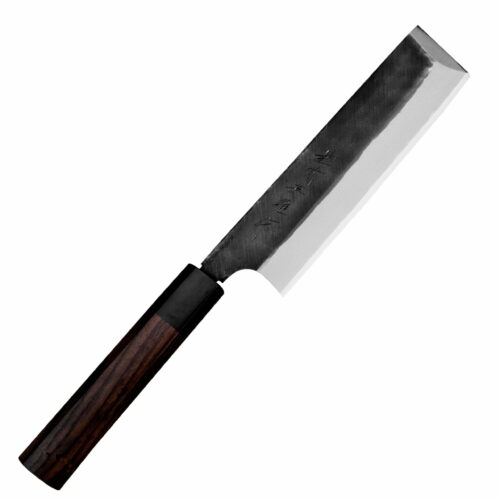
Usuba – this is a Japanese kitchen knife for slicing vegetables. The Usuba has a straight blade and is ideal for cutting and slicing thin slices of vegetables.
These are just a few examples of Japanese knives that are often made from Aogami #2 steel. Thanks to its hardness and durability, Aogami #2 steel is ideal for the production of kitchen knives that provide excellent sharpness and long-lasting use.
Also check out other types and kinds of Japanese knives:
Masamoto Knives Masashi Yamamoto Knives Masahiro Knives Masutani Knives Sujihiki Kiritsuke Petty/Pairing Honesuki Boning Knife Bread Knife Slicing/Sashimi Knife Fish Filleting Knife Sushi Knives Aogami Super AUS-8 AUS-10