
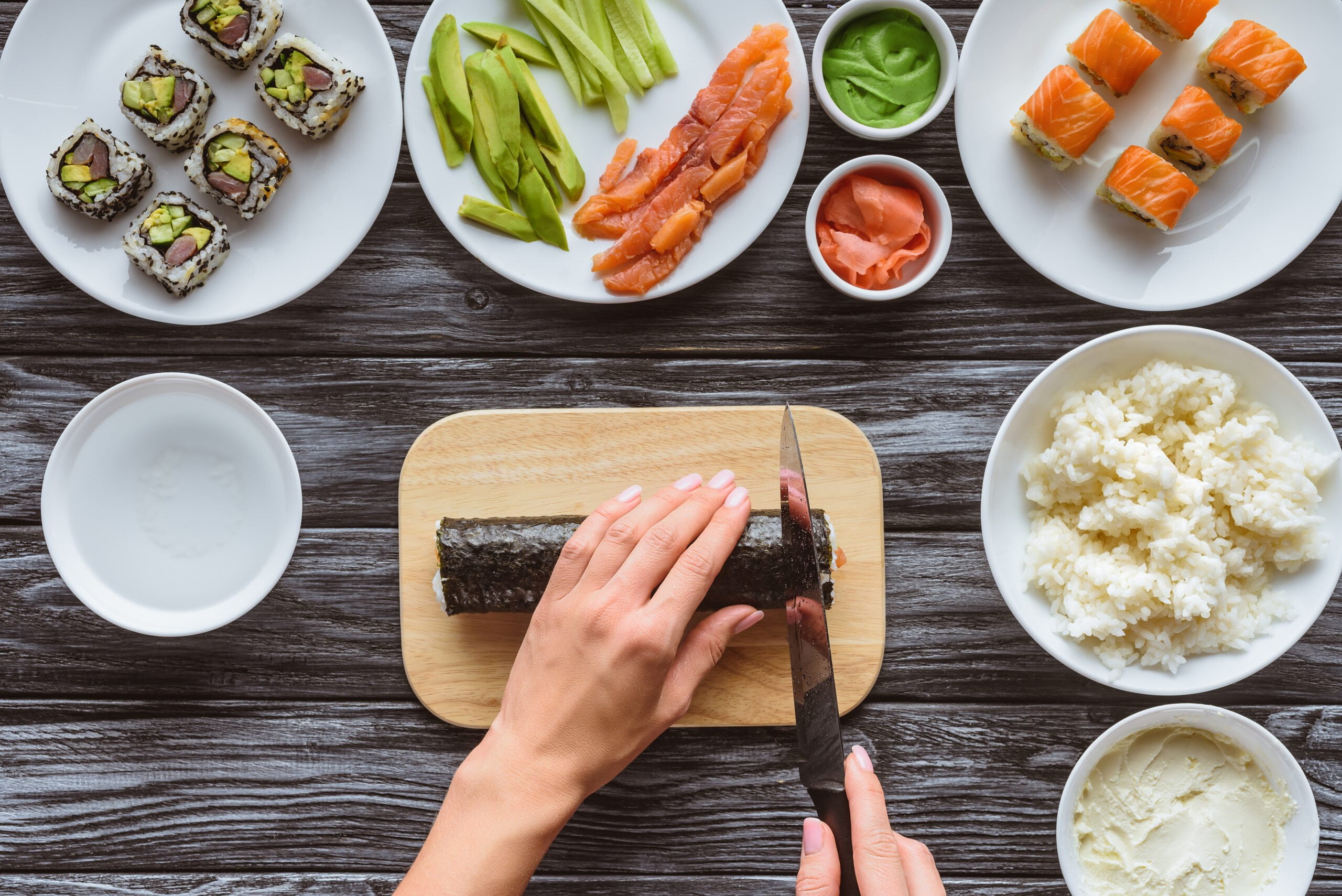
In the world of cuisine, sushi is one of the most refined and demanding dishes. Its preparation requires precision, patience, and the right tools. Among these tools, Japanese knives are indispensable. But what makes them so ideal for preparing sushi? The answer lies in their unique construction, tradition, and the technology behind their production.
The Art and Science Behind the Sharpness of Japanese Knives
Japanese knives are a true masterpiece of engineering and craftsmanship. Their unique construction begins with the choice of steel. Unlike typical kitchen knives, which are often made of stainless steel, Japanese knives are usually made of high-carbon steel, which is much harder. This hardness allows the knife to be sharpened to an exceptionally sharp edge, which is ideal for precise cutting.
What’s more, Japanese knives are often hand-forged using a technique called damascening. This technique, which comes from the process of creating traditional samurai swords, involves repeatedly folding and forging steel, which creates a layered pattern on the blade. This process not only adds to the knife’s beauty but also increases its hardness and resistance to damage.
The Benefits of Specialization: The Variety of Japanese Knife Types
Japanese cuisine is known for the variety of knives that are adapted for different tasks. For example, the **Yanagiba** knife is specially designed for slicing fish for sushi and sashimi. Its long, thin blade allows for a single, fluid cut, which minimizes damage to the structure of the fish meat, preserving its delicate flavor and texture.
Another type of knife is the **Deba**, which is used for filleting fish. Its heavy, thick blade is ideal for cutting through bones and cartilage, while the blade is sharp enough to precisely separate the meat from the skin. There is also the **Usuba**, a vegetable knife, which is used for precise slicing and peeling vegetables. Its flat blade allows for very thin cuts, which is ideal for decorating sushi.
Craftsmanship with Passion: Tradition and Skill in the Production of Japanese Knives
Japanese knives are the result of centuries of tradition and craftsmanship. Each knife is handmade by an experienced blacksmith, who dedicates many hours to its creation. This process begins with the selection of the right steel, which is then forged, folded, hardened, sharpened, and polished to perfection.
This care and attention to detail translates into the knife’s quality and performance. Each knife is unique and has its own personality, which is a reflection of the skill and style of the blacksmith who created it. This tradition and craftsmanship make Japanese knives not only functional but also beautiful. They are a true work of art that adds extra value to the art of preparing sushi.
Comfort and Control: The Balance and Ergonomics of Japanese Knives
Japanese knives are not only sharp, but also well-balanced and ergonomic. The design of these knives is focused on providing comfort and control during cutting. The knife’s handle is usually made of natural wood, which is not only beautiful but also provides a secure grip. The handle is also properly balanced against the blade, which ensures excellent control during cutting.
The knife’s ergonomics are crucial, especially when preparing sushi, where precise cuts are key. Long hours spent slicing ingredients can be tiring for the hands, which is why Japanese knives are designed to minimize pressure and fatigue. Their light construction and fluid cutting make them a pleasure to use, even for long periods.
Sharpness That Lasts: The Long-Lasting Sharpness of Japanese Knives
Thanks to the high-quality steel used in their production, Japanese knives maintain their sharpness for a long time. This means they are ideal for continuous slicing of raw ingredients, such as fish, which are the basis of sushi.
A knife’s sharpness is crucial for preserving the quality and texture of the ingredients. Dull knives can damage delicate ingredients, such as raw fish, changing their texture and affecting the taste of the final product. That’s why Japanese knives are sharpened to such a sharp edge that they can easily and cleanly cut through ingredients without damaging them. What’s more, Japanese knives are easy to sharpen. Unlike stainless steel knives, which can be difficult to sharpen, Japanese knives can be sharpened using a sharpening stone, which allows them to maintain their sharpness for a long time.
Summary
Japanese knives are unparalleled in their precision, performance, and durability, which makes them the ideal tool for preparing sushi. Their unique construction, resulting from centuries of tradition and craftsmanship, provides unmatched sharpness and cutting precision. The variety of knife types allows the tool to be adapted to a specific task, ensuring optimal results. The balance and ergonomics of these knives provide comfort and control, which is essential during the long process of preparing sushi. Finally, the long-lasting sharpness of Japanese knives guarantees that they will serve you for many years, providing consistently excellent results.


