
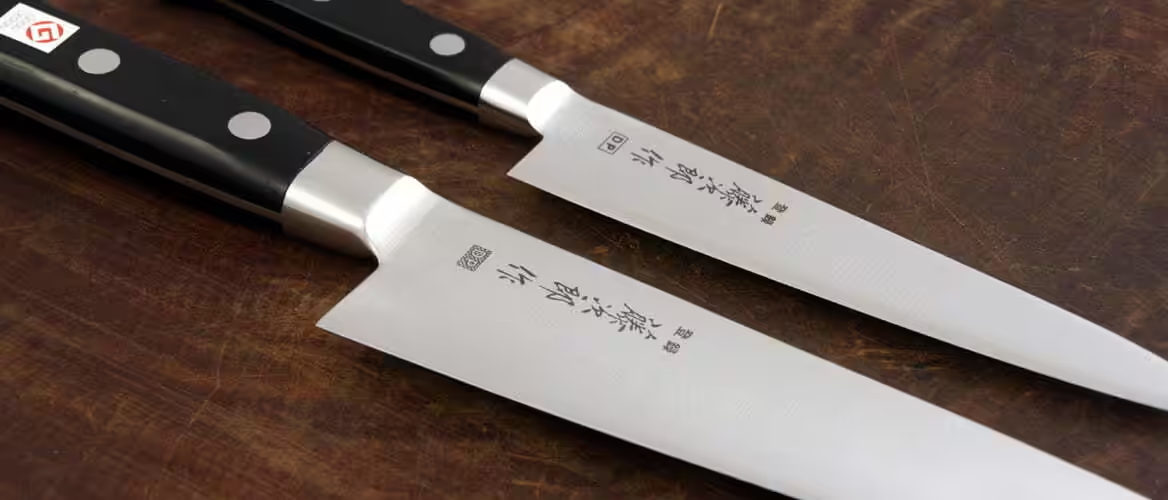
A Japanese kitchen knife is a guarantee of the highest quality and pure pleasure while working in the kitchen. Japanese kitchen knives are very sharp and beautifully made. They are a stylish and functional addition to any kitchen. For kitchen knives to serve us for many years, we must put in a little effort and take proper care of them.
About Japanese kitchen knives
Kitchen knives from Japan are characterized by very hard blades – on average, the blades are hardened to a level of 58-60 HRC, which is a completely sufficient hardness, but sometimes the knives are even 65-67 HRC. For comparison, popular German or Swedish knives have a blade hardness of 53-55 HRC. Thanks to proper hardening and the type of steel used, Japanese knives are among the best kitchen knives in the world, enabling the thinnest and most precise cuts. If you currently use “supermarket” knives, you will feel a huge leap in quality when you make your first cut with a Japanese knife.
As a rule, when using kitchen knives, we should take all precautions, as we are dealing with very sharp tools. So, what should we pay attention to?
How to use a kitchen knife
When performing a specific task, it is worth using a knife designed for it; for chopping, the best will be a Nakiri knife, for slicing a Sujihiki knife, and for bread, a serrated bread knife
When using the knife, try not to bend the blade sideways – if the knife is not flexible enough, you may break the blade. It is best to make up and down movements with the knife in such a way as not to bend the blade.
Cutting hard products is highly inadvisable, avoid frozen food and meat with bones. Cutting them will dull the knife or, in the worst case, chip the blade. The cutting board should be wooden; plastic boards also work well. I definitely advise against cutting boards made of stone or glass.
To use a knife safely, it must be sharp. When we cut with a dull knife, we have to put a lot of force into it and thus cause an uncontrolled movement of the blade, which makes an accident in the kitchen more likely.
Washing a kitchen knife
Immediately after use, hand wash your knife and dry it with, for example, a paper towel or a cloth. If you have knives made of carbon steel, such as Aogami or Shirogami, wash the knife immediately after use, as carbon steel knives start to discolor very quickly in contact with water or acidic ingredients. Sushi masters usually use carbon steel knives and, as you can see, during work, they wipe their knives with a cloth every now and then. Avoid aggressive chemicals or rough sponges. It is very important to never wash knives in the dishwasher – the detergent destroys the handle, and the washing process can dull or even damage the knife.
How to store a kitchen knife
Store your knife primarily in a safe way, so that children do not have access to it. You should not store the knife loosely in a drawer, as it may bump against other utensils and you may dull your knife. The best way to store a knife is to use magnetic strips and knife blocks; you can also use special blade guards. If you travel with your knives, remember to properly protect the blades.
Maintenance of kitchen knives
If you have carbon steel knives and you know you will not be using them for a long time, for example, because you are going on vacation, you can protect the blade with oil to be sure that the blade will be 100% protected against moisture.
Sharpening kitchen knives
All our knives are incredibly sharp out of the box and will remain so for a long time, but how long depends on whether you use the knife at home or work in a restaurant. Eventually, the time will come when you will have to sharpen your knife. And we know that using a dull knife is not the best idea and it’s better not to wait until the last minute. When it comes to daily maintenance of the cutting edge, I recommend using a honing steel – it can be steel, ceramic, or diamond. I believe that for proper sharpening of kitchen knives, the best way is to use whetstones. When it comes to knife sharpening, there are a lot of solutions and systems available on the market, from the simplest to those that require specific skills.
Handle maintenance
Most kitchen knives have handles made of wood, however, they are properly reinforced and impregnated so that they do not require major care treatments. An exception are traditional Japanese knives whose handles are made of natural wood and it is worth treating them with oil or wood wax once every few months.
Read also: ceramic knives – what you need to know about them?


