
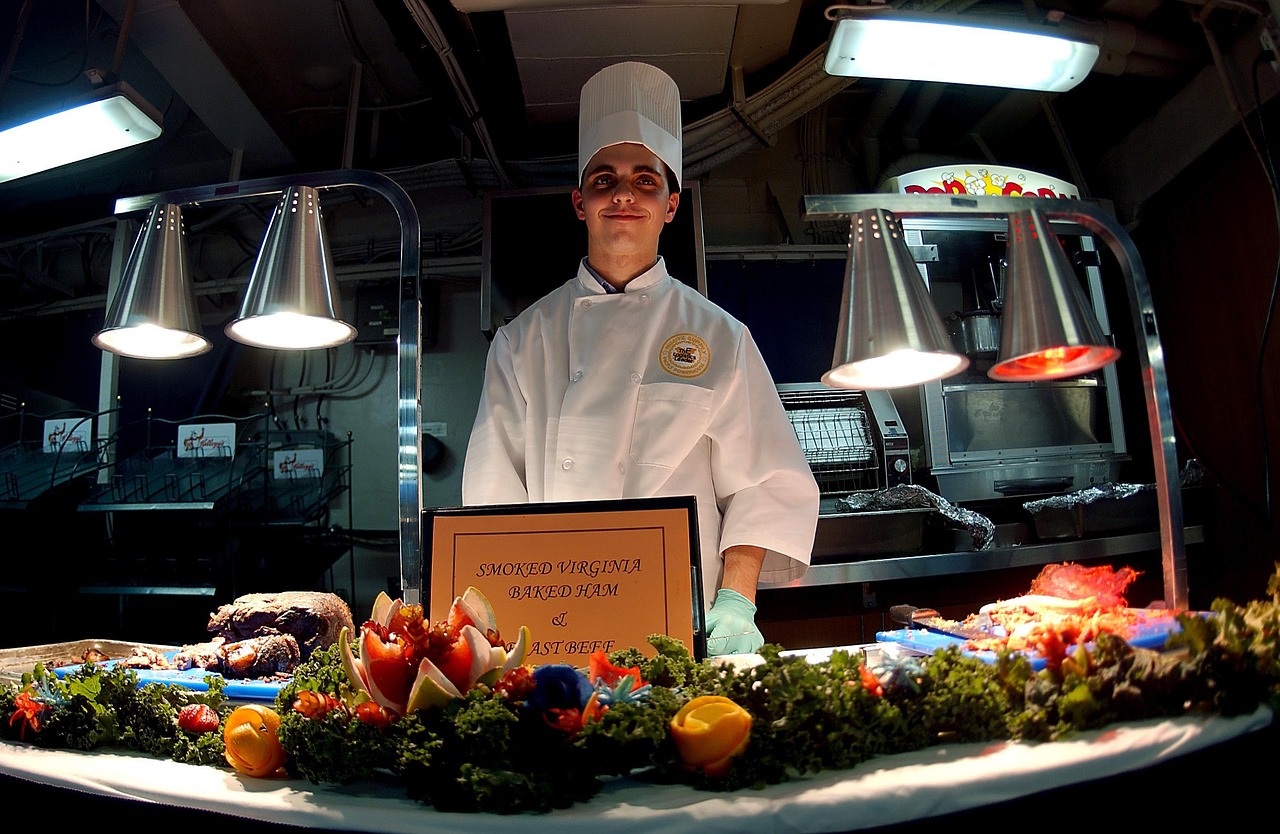
When preparing a salad, soup, or main dish, you can cut the products into different shapes. For some dishes, cubes or sticks will be suitable, while for others – very thin slices. When you start cutting, remember to follow certain rules. Thanks to this, the vegetables and fruits will look perfect, and the result of your work will be fully professional.
Dicing Vegetables and Fruits
The dicing technique is one of the most common methods in kitchens around the world. Vegetables cut into smaller or larger cubes are the basis of many dishes. You can find several types of it: Brunoise – i.e., 1-2 mm cubes, Macedoine – with a side of about 5 mm, and also Mirepoix, i.e., irregularly cut and quite large cubes with a size of 1-3 cm. What is important, the dicing technique is also relatively simple – not causing problems even for beginner cooks. Do you want to use it? Reach for a chef’s knife or a multi-purpose knife, which will allow you to prepare shapely cubes.
If you plan to cut vegetables or fruits into a round shape (e.g., onions, tomatoes, apples, as well as carrots or parsley), first cut them in half lengthwise. Then place them flat side down, cutting off the ends if necessary. Cut the product lengthwise into slices of the selected thickness, but do not separate them from each other. Finally, turn the vegetable or fruit 90 degrees and cut it again, this time crosswise.
Slicing Products into Slices
Another popular method of cutting vegetables is slicing. This technique is called Vichy. According to some, it is intended only for carrots, while according to others – for all vegetables with a cylindrical shape. You can add products prepared this way to salads and soups, and also use them to decorate main dishes or a buffet. Remember to use a sharp knife during work. Thanks to this, you will avoid it slipping off the surface of the product, performing the planned work quickly and safely.
To prepare thin slices, cut the vegetable crosswise, cutting off pieces of a similar thickness. The final shape of the slices will depend on the inclination of the knife relative to the board – they can be round or more elongated, spindle-shaped. You can also cut large or slightly thicker slices in half.
Cutting Vegetables and Fruits into Sticks
The last, but eagerly used by professional chefs, method of cutting is sticks – fine like Julienne matchsticks or slightly thicker Batonnets. They require a lot of precision, while guaranteeing an excellent visual effect. It is easiest to make them using a special vegetable knife with a size adapted to the product being cut. It must be appropriately sharp and free of serrations, which will allow you to prepare perfect sticks of the desired thickness.
How to cut vegetables or fruits into sticks? Divide the product into two or three equal parts. Then cut it into sheets of the same width. Turning them on their side, finally make cuts in such a way that sticks of the desired thickness are formed. To speed up the work, you can cut several layers at the same time. Just remember that they must be the same width.
Do you want to cut like a pro? Use the above techniques! The short course on dicing, slicing, or sticks described in this article will allow you to prepare vegetables or fruits in the most popular shapes. At the same time, do not forget about the extremely important role of the knife. Only a properly selected and sharpened tool will enable precise cuts, the effect of which will delight both household members and guests invited to the party.


